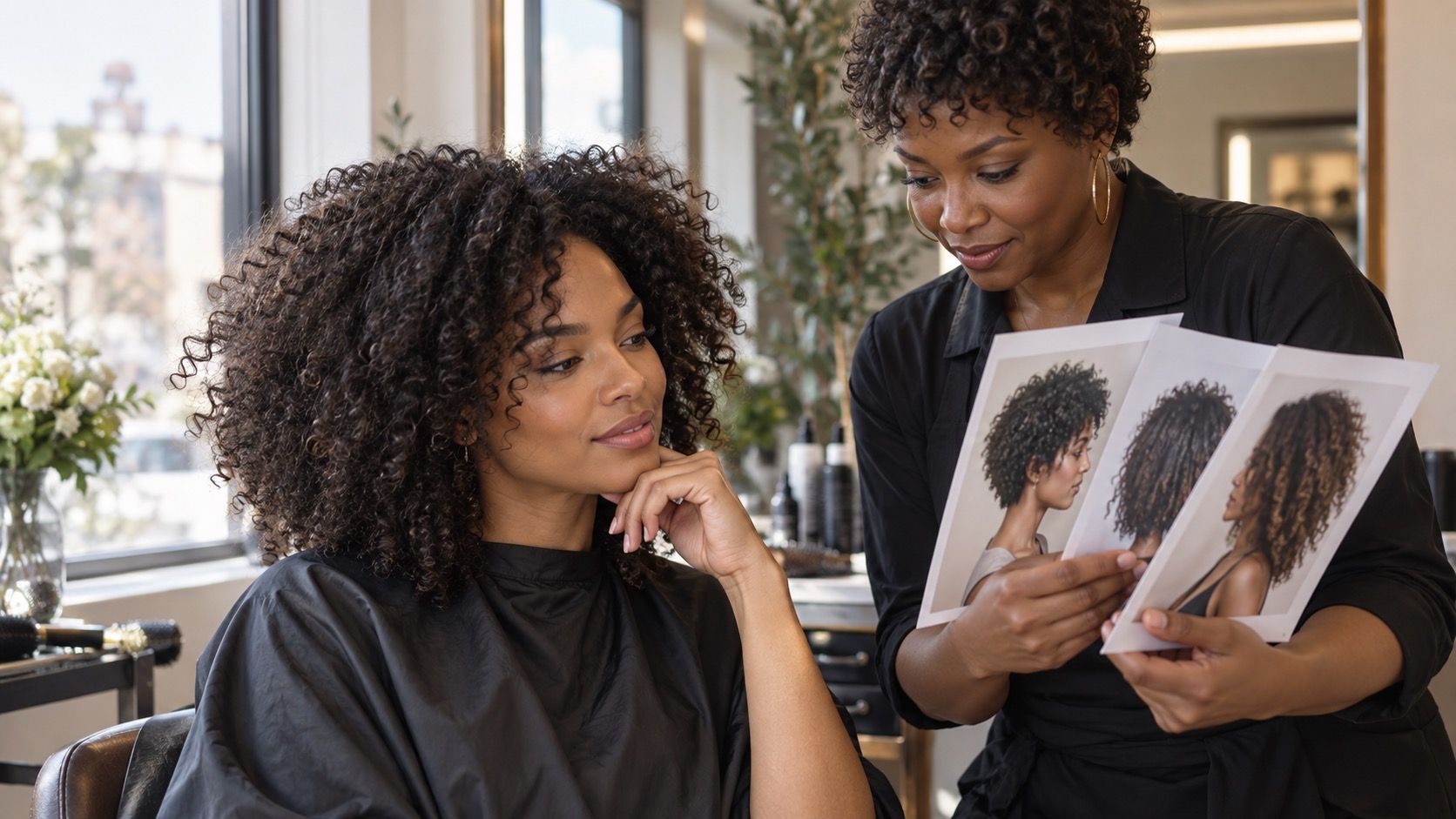
A triangle face shape is often called a pear face shape because its visual weight sits lower on the face: the forehead is relatively narrow and the jaw is the broadest point. That description is useful only when it helps you make a styling choice. It is not a diagnosis, and it does not mean you need to hide a strong jaw. The practical question is whether you want your haircut or frames to echo that shape, soften it, or bring a little more attention upward.
How triangle face proportions usually work
Look at the outline rather than one isolated feature. On a triangle face, the temples and forehead tend to form the narrow end of the silhouette, while the jawline gradually becomes wider toward the lower cheeks. The chin may be rounded, pointed, or square; the key relationship is jaw width compared with the forehead, not the chin alone.
Confirm the jaw and forehead relationship before changing your hair
This can be confused with a square face, especially when the jaw angles are clear. A square face normally keeps similar width through the forehead, cheekbones, and jaw. A triangle shape has a more noticeable widening from the upper face down. Hair pulled tightly behind the ears makes that difference easier to see, but take several views: a close phone lens, a tilted head, and a strong overhead light can all exaggerate proportions.
It also helps to separate bone structure from temporary details. A full beard, a heavy contour, wide curls at the jaw, or hair tucked under a hood can make the lower face look broader than it is. Compare a front-facing photo in neutral daylight with a mirror view from a comfortable distance. You are looking for a repeatable pattern, not perfect symmetry.
Use a soft tape measure if you like numbers, but do not treat them as a test you can fail. Measure across the forehead at its widest point, then across the jaw near the corners. For a triangle face, the second measurement is often visibly larger. In the mirror, notice where a straight line from temple to jaw would angle outward. That outward movement is usually more informative than a small difference in centimeters.
Next, check the cheekbones. Some triangle faces have pronounced cheekbones, which can make the face appear more diamond-like in photographs. A diamond face is widest at the cheekbones and narrows again at the jaw; a triangle face retains its lower width. When the distinction feels unclear, choose styles by the effect you want rather than chasing a label. A little crown lift and a side sweep can work well in either case.
Pay attention to your normal habits too. If you wear a center part every day, clip back one side, or keep a short fade, that routine changes the visible outline more than a chart does. A useful triangle face shape guide should leave room for your hairline, texture, and personal style, not replace them with a rigid template.
Haircuts that shift visual balance upward
The most common goal is to add gentle width or softness around the temples and crown while avoiding a solid block of volume at the jaw. For medium and long hair, layers that begin around the cheekbones or temples can create movement above the widest part of the face. A softly blown-out bob, airy shag, collarbone layers, or loose waves can all do this when the ends are not packed into one blunt shelf at chin level.
For shorter hair, texture at the crown often matters more than total length. A pixie with a longer top, a side-swept crop, or a softly tapered cut can direct the eye upward. With very short hair, avoid assuming that more height is always better: an extreme quiff may feel disconnected from your features. Moderate lift and a little irregular texture usually look more natural than a sharply engineered peak.
For men, a textured top with a controlled taper can be a strong starting point. Keeping some width near the upper sides, rather than taking the temples to skin, may make the forehead read as more balanced. Facial hair is another variable. A beard that is widest at the jaw can reinforce the triangle outline, while a shorter, tidier shape or more definition at the chin can change the emphasis. Growth pattern and maintenance time should decide the final version.
| Cut detail | Typical visual effect | What to watch |
|---|---|---|
| Layers near the temples | Adds movement around the narrower upper face | Very blunt layers can look shelf-like |
| Soft crown volume | Draws attention upward without hiding the jaw | Needs a realistic styling routine |
| Chin-length blunt bob | Can emphasize the lower width | Works best when the effect is intentional |
| Textured top and taper | Gives short hair more upper-face presence | Overly tight sides may narrow the temples further |
Bangs and partings can change the outline quickly
A fringe is not mandatory, but it can be useful when you want more softness around a narrower forehead. A wispy fringe, curtain bangs that open around the brows, or a side-swept fringe can introduce horizontal detail near the top of the face. Dense, very short straight bangs create a stronger line; they can be striking, but they also make the forehead look shorter, so try the effect with pinned hair before committing.
Partings are low-risk experiments. A deep side part often creates asymmetry and lift at one temple, which can be flattering when the lower face feels visually dominant. A center part can also work, particularly with face-framing layers that begin above the jaw. The issue is not that one part is forbidden; it is where the hair falls. Flat, tucked-behind-ear lengths ending exactly at the jaw tend to stress the widest area more than a parting does.
Texture changes the answer. Fine, straight hair may need a light mousse or round-brush work to keep crown layers from collapsing. Dense curls can supply natural temple volume, but their cut needs to account for shrinkage. Ask for the shape to be assessed dry as well as wet, because a curl pattern that opens at the cheek can look very different after it springs up.
Choose glasses by fit before face-shape rules
Top-weighted frames are often a useful starting point for a triangle face: a defined brow line, a slightly wider upper edge, or subtle color at the top can direct attention toward the eyes. Cat-eye shapes, browline styles, and frames with a gently upswept outer corner may create that effect without looking theatrical. Rounded frames can soften an angular jaw, while more geometric shapes can look excellent if you prefer contrast.
Fit still comes first. The frame should sit comfortably on the bridge, keep your pupils near the horizontal and vertical center of each lens, and avoid pressing into the cheeks when you smile. A frame that is technically suitable for your face shape but slides down the nose or leaves a wide gap at the temples will be distracting. Prescription strength also affects lens thickness and the amount of usable frame depth.
Try frames in ordinary daylight, not only under bright store lighting. Take a front photo with the camera held a little farther away, then look at it beside a candid photo. The goal is not to make the jaw disappear. It is to find a proportion, color, and line that feel settled on your face.
Accessories and styling details that deserve a real-life test
Earrings, collars, hats, and makeup placement can alter the same balance on a smaller scale. Earrings with some width or detail near the cheekbone draw the eye upward; very heavy pieces ending at the jaw may add lower-face weight, though that can be a deliberate fashion choice. Hat brims and headbands can add visual breadth around the upper face, provided they are comfortable and suit the occasion.
With makeup, placing blush high and outward toward the temples can emphasize the upper cheek area. A heavy stripe along the jaw has the opposite effect and often looks harsh in daylight anyway. None of these choices needs to be permanent. Test one change at a time: change the parting before buying new frames, or try a clip-in fringe before cutting bangs. That makes it easier to tell which adjustment actually feels like you.
Bring a clear request to the chair or optical shop
Instead of asking for the best haircut for a triangle face as though there is one answer, describe your aim. You might say that your jaw feels broad in photos and you would like soft movement around the temples, or that you enjoy your strong jaw and want a cut with clean contrast. Mention how often you heat-style, whether you air-dry, and which lengths have been frustrating in the past.
For glasses, say whether you need all-day comfort, progressive lenses, sunglasses, or frames that stay put during exercise. These needs influence bridge fit, temple pressure, lens height, and materials. Face shape gives you a starting direction; the best final choice is the one that works with your prescription, routine, and the expression you see when you stop analyzing every millimeter.