Learning how to measure face shape is less about producing four impressive-looking numbers than making fair comparisons between them. The tape measure cannot decide your style, and it will not erase natural asymmetry. What it can do is show whether length, forehead width, cheekbone width, or jaw width leads the overall picture, which is the information behind most useful face-shape guidance.
Why one measurement never tells the whole story
It is tempting to measure face length, find a number, and immediately search for a matching category. That shortcut fails because face shapes are patterns. A long face with wide cheekbones reads differently from a long face with a narrow lower half. Two people can share nearly the same face length and width but have entirely different jawlines, hairlines, and visual balance.
Get the tools and position right before measuring
Think in comparisons instead. Is the cheekbone width the clear maximum? Does the forehead match it or sit noticeably narrower? Is the jaw close to the forehead width, or does it taper toward the chin? These are the practical signals that separate a round impression from a square one, or a heart-shaped outline from an oval one.
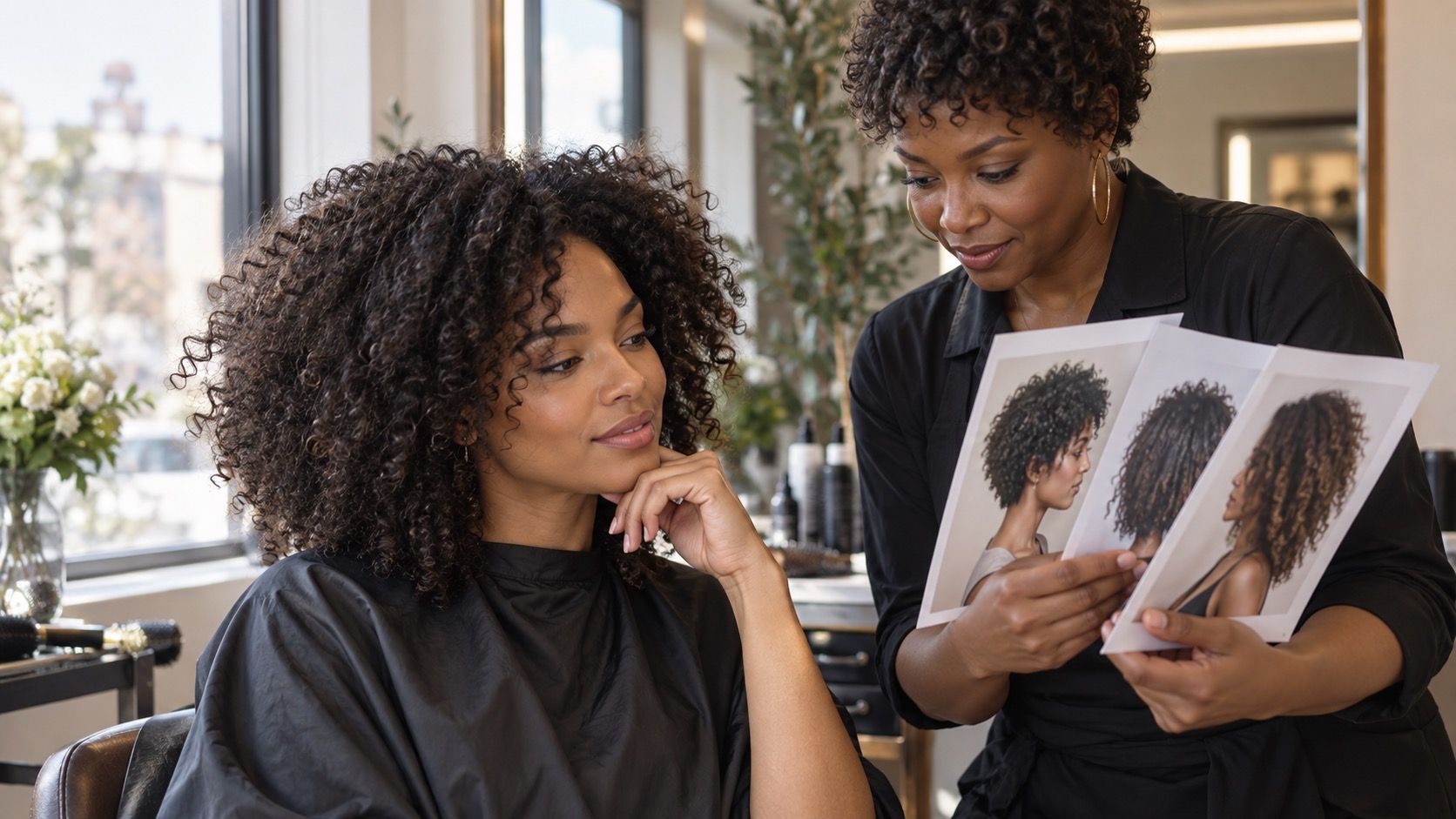
Measurements also depend on what you are trying to choose. A person comparing glasses needs the horizontal balance of forehead, cheeks, and jaw. Someone considering fringe or layers needs to know how the visible hairline changes face length. The numbers are most helpful when they support a real decision rather than a hunt for a permanent label.
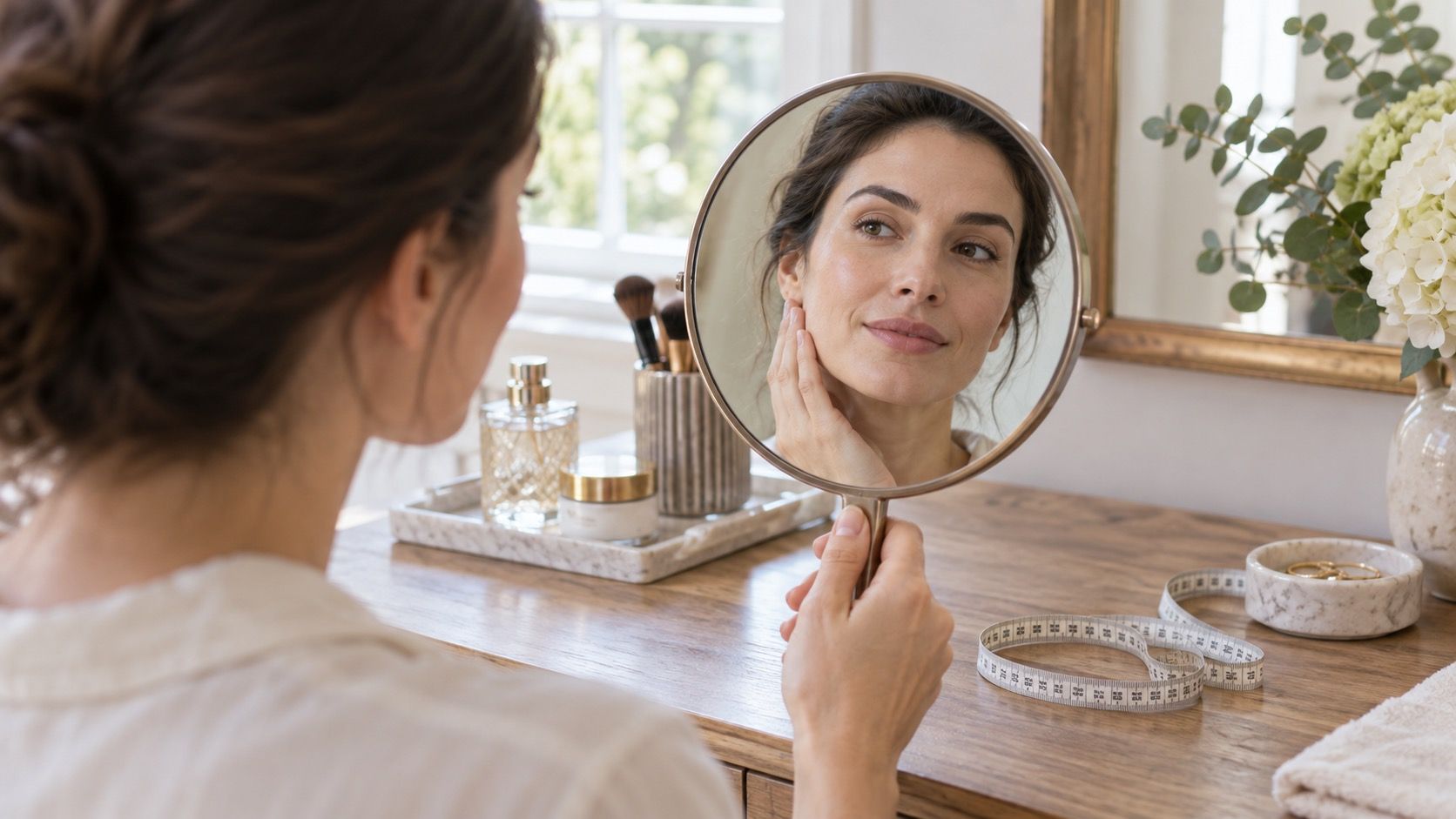
Use a soft sewing tape that follows the skin without compressing it. A stiff construction tape makes it hard to reach the jaw curve accurately. If you only have a ruler, use a string to mark curved distance, then lay the string flat beside the ruler. Record everything in centimeters or inches, but do not mix units halfway through.
Stand before a mirror with even light from the front. Daylight near a window is often ideal if the sun is not cutting across one side of your face. Tie back hair from the temples and forehead. You need to see the natural hairline, even when it is uneven, but you should not pull it so tightly that the skin shifts and creates a false edge.
Keep the head level and jaw relaxed. Measuring with your chin lifted makes the lower face look shorter; looking down can make it look longer. Avoid measuring right after a hard workout, a salty meal, or a night of little sleep if temporary puffiness will distract you. These changes are not flaws, but they can make a close comparison less consistent from one session to the next.
Use the same landmarks for every face-shape measurement
For face length, place one end at the midpoint of your hairline and run the tape down the center of the face to the lowest point of the chin. Do not begin at the top of the forehead or at the edge of a widow’s peak. The goal is the typical central hairline, because that is what contributes to the face outline when you look straight ahead.
Measure forehead width at its broadest point, usually from one temple area to the other. This is not necessarily where your eyebrows begin. For cheekbone width, find the outermost high point of each cheekbone, commonly below the outer corners of the eyes, and measure straight across. A mirror helps you keep the tape level rather than letting it fall across the fuller part of the cheeks.
Jaw width needs a different approach. Measure from the chin center along the jawbone to the angle beneath one ear; then double it. This captures the jawline rather than the flat distance across the mouth. If facial hair covers the contour, press the tape gently enough to feel the bone without drawing it tight. Make a note if a beard is shaping the visible outline, since that is relevant when you later judge face shape in a photo.
| Measure | Landmark | How to keep it consistent |
|---|---|---|
| Face length | Mid-hairline to chin tip | Look straight ahead |
| Forehead | Broadest temple-to-temple span | Keep hair off the temples |
| Cheekbones | Outermost high cheek points | Hold the tape level |
| Jaw | Chin center to jaw angle, doubled | Follow the bone, not the mouth line |
Compare face length and width without overreading tiny differences
Once you have four numbers, arrange them from largest to smallest. If cheekbone width is largest and the jaw is distinctly smaller, you may have a diamond or oval tendency. If forehead and cheekbones are similar while the jaw narrows, heart is worth considering. When the three horizontal widths are close, face length and the jaw contour become the deciding details.
For a quick check, divide face length by cheekbone width. A result only slightly over one often reads compact or balanced, while a clearly larger result supports a longer face. Treat this as a clue, not a diagnostic. A strong chin, curly hair volume, or a broad forehead can change the visual impression more than a small mathematical difference.
Do not force a conclusion because two widths differ by a quarter inch or half a centimeter. Tape placement alone can account for that. Differences that remain after two careful attempts matter more. It is also useful to look at the outline from a normal conversational distance. If the face seems gently longer but the jaw is rounded, “oval leaning oblong” may be more honest and more useful than claiming a pure category.
Handle asymmetry and changing features sensibly
Almost every face has some asymmetry. One cheekbone may sit higher, one eyebrow may arch more, and the jaw can look stronger on the side you favor in photos. Measure once on each side if the difference is obvious, then use the average or write both values down. Trying to select the “correct” side usually creates more noise than information.
Hair, makeup, glasses, and facial hair change the visible face shape as well. That does not make the underlying measurements useless; it simply means a styling choice should be tested in its finished context. A clean measurement session might suggest a broad forehead, while a side part and soft fringe make the everyday outline read more balanced.
Repeat the process on another day if the result surprises you. Use the same mirror, tape, and relaxed posture. Reliable face shape measurements should tell roughly the same story each time. When they do, you have enough information to experiment with hairstyles, frames, contour placement, or beard lines without treating any single number as a rule.