A face shape detector can be useful, but it works best when you treat it as a comparison tool rather than a verdict. Your face is three-dimensional, expressions change it, and hair can hide the very proportions you are trying to see. A clear mirror check, a few measurements, and one honest photo usually tell you more than chasing the label that sounds most flattering.
What a face-shape result can actually help you decide
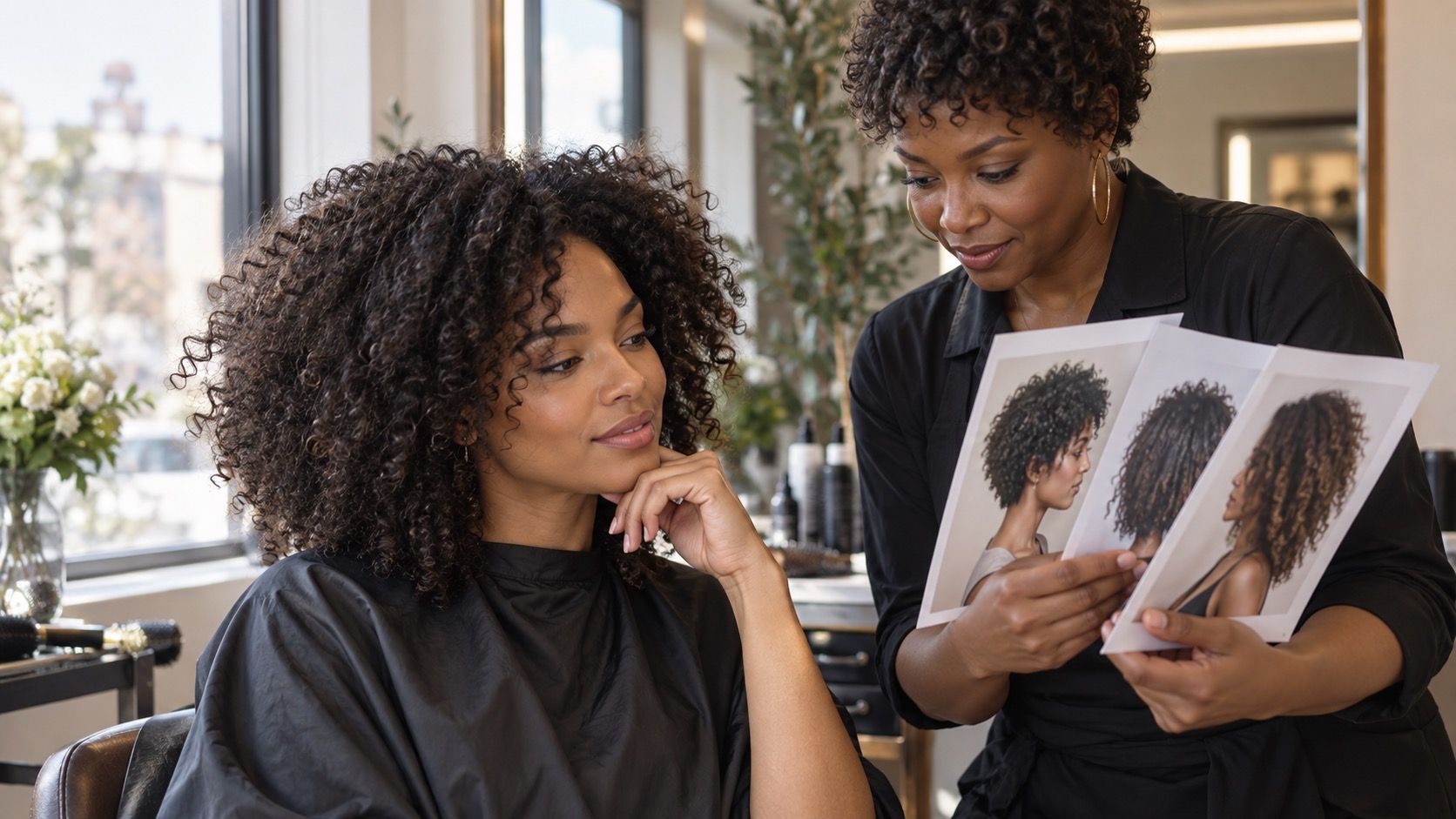
The practical question behind “what is my face shape?” is usually not academic. You may be choosing eyeglass frames, considering bangs, comparing beard lines, or trying to understand why a haircut looked different in the salon mirror than it did at home. A result gives you a starting point for balance: where your face is widest, whether the lower third tapers, and how long the face reads at a normal viewing distance.
Set up a mirror check that does not distort the answer
It does not need to place you neatly in one box. Many people sit between oval and oblong, square and round, or heart and oval. That is normal. An oval face may have a slightly broad forehead; a square face can still have soft cheeks. The useful observation is the repeating pattern, not a single sharp angle or one unusually prominent feature.
Keep your goal specific. For glasses, cheekbone width and jaw contrast matter more than a perfect category. For a hairstyle, the visible length after your hair is styled matters more than the length you measured with wet hair pulled back. This is why a sensible face shape test begins with looking, then checking the impression with numbers.
Stand in front of a plain mirror in daylight or even, soft bathroom light. Move back far enough that you can see your whole head without leaning toward the glass; about an arm’s length is a good minimum. Strong light from one side can deepen one cheek or jaw corner and make your face look more angular than it normally does.
Pull hair away from the forehead and temples with a soft headband or clips. Do not flatten your hairline into a hard curve if it naturally has texture, and do not try to “correct” a widow’s peak. The natural hairline is part of the outline. Remove large earrings and, if you wear glasses, take them off for this stage so the frame does not redraw the apparent width of your face.
Relax your mouth. Clenching makes the masseter area look wider; raising your chin hides the jaw taper; a broad smile changes the cheeks. Look straight ahead, with the camera-height equivalent of your eyes level. It can help to trace the broad silhouette on a steamed mirror with a finger, but do not trace every small curve. Mark only the widest forehead area, widest cheekbone area, outer jaw, and chin.
Measure the four proportions that matter most
A flexible sewing tape is enough, although a ruler and a piece of string work if the tape is not available. Write down four values without rounding them into a story too soon. First, measure face length from the midpoint of the hairline to the bottom of the chin. Then measure forehead width across the broadest usable point, usually between the temples rather than directly at the hairline.
For cheekbone width, locate the outermost point under each eye and measure across the face in a straight line. This is often the largest width and is easy to underestimate if the tape slides downward. For the jawline, measure from the chin center to the corner below one ear, follow the bone rather than pulling the tape across the air, double that number, and note it as jaw width.
| Measurement | Start and end points | Common mistake |
|---|---|---|
| Face length | Center hairline to lowest point of chin | Tilting the head upward |
| Forehead width | Broadest point from temple to temple | Measuring only the visible center |
| Cheekbone width | Outermost cheekbone point to point | Letting the tape dip over the cheeks |
| Jaw width | Chin center around one jaw corner, then doubled | Using the width of the mouth instead |
Repeat each measurement once. A difference of a few millimeters is ordinary, especially if your hairline is uneven or one side of your face is slightly fuller. You are looking for relationships: cheekbones clearly wider than the jaw, a forehead close to the cheekbone width, or a length that is visibly larger than every horizontal measure.
Compare the pattern before choosing a label
Start with the widest area. If the cheekbones lead and both forehead and jaw are narrower, the outline may lean diamond or oval depending on length and chin shape. If the forehead is widest and the face narrows through the jaw to a pointed chin, heart is a more plausible starting point. If forehead, cheekbones, and jaw are close in width, look next at length and the contour of the lower face.
A round face generally has similar length and width with a soft, curved jaw. A square face also has comparable length and width, but the jaw and forehead read more direct and broad. An oblong or rectangular face has noticeably more length than width; rectangular shapes often carry a straighter jaw and forehead, while oblong faces may remain softer around the edges. Oval faces are longer than wide, with balanced widths and a jaw that narrows gently rather than abruptly.
A simple ratio can stop a guess from drifting. Divide face length by cheekbone width. There is no magic cutoff, because features are not manufactured to a template, but a result close to one supports a shorter, broader reading. A noticeably larger result supports a longer reading. Then return to the mirror: if the ratio suggests length but the visual outline looks compact, check whether you measured from hairline to chin while your face was angled.
Use a second photo as a cross-check, not a replacement
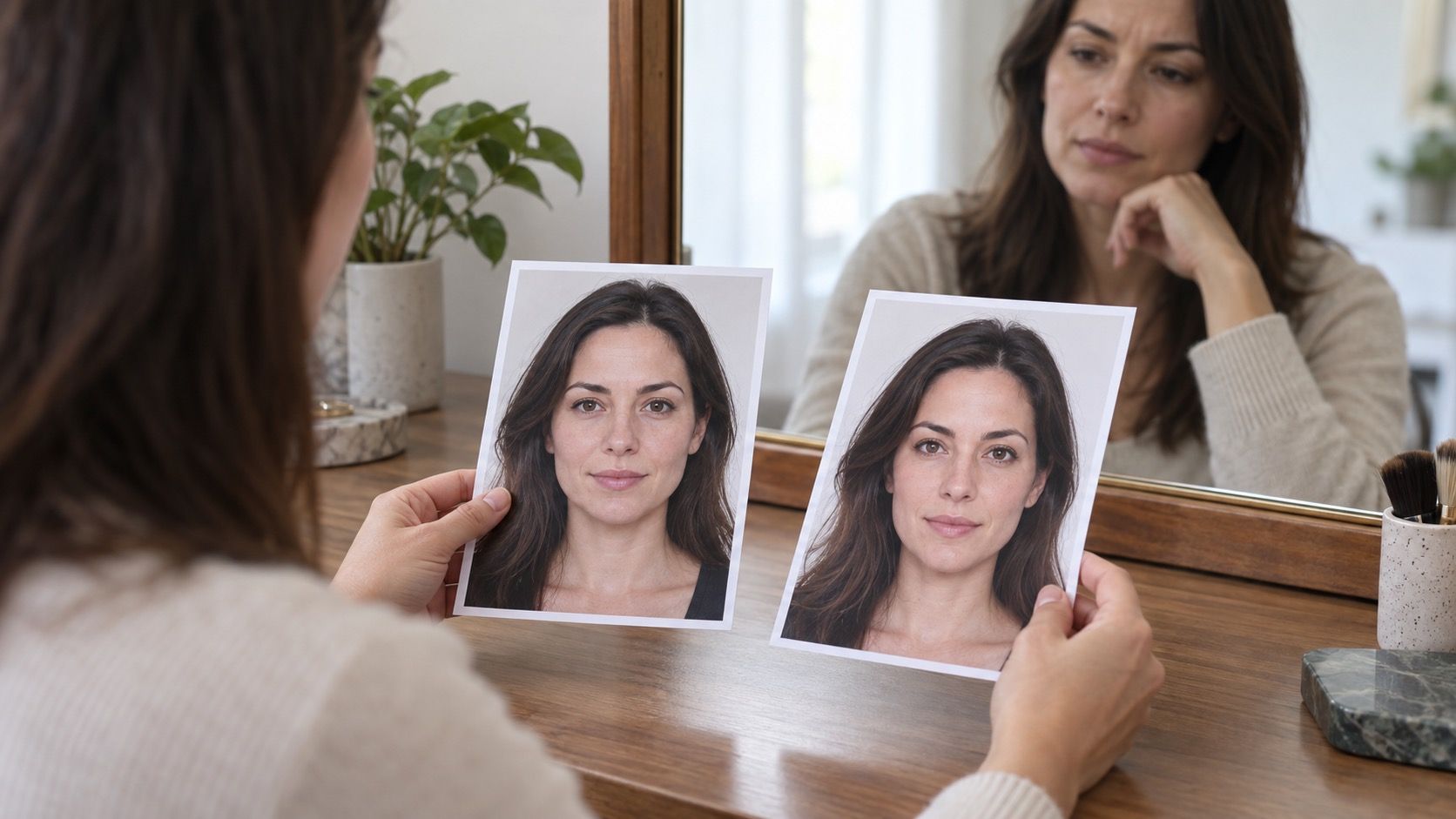
Take a front-facing photo in indirect daylight, with the camera at eye level and several feet away. A rear phone camera on a timer is usually more trustworthy than a close selfie. Keep the head straight, hair off the sides of the face, and expression neutral. Portrait mode is unnecessary here; its edge processing can blur the hairline and jawline you need to inspect.
View the photo at a modest size, not zoomed until every pore becomes a landmark. First notice the broad shape of the forehead, cheeks, and chin. Then compare it with the mirror notes. If both views agree that your face is longest vertically and widest around the cheekbones, that is stronger evidence than an app calling you something else from a single angled image.
If the photo and mirror disagree, do not average two labels. Check the setup first: phone distance, head tilt, lens choice, hair coverage, and side lighting explain most conflicts. A face shape detector is most reliable when it gives a repeatable description of your proportions. Once you have that description, use it flexibly when you test frames, cuts, makeup placement, or grooming choices in real life.